
Reading Pennsylvania Unclaimed Money
Reading residents may be owed money that is sitting unclaimed at the Pennsylvania Treasury. As the county seat of Berks County, Reading has a history rooted in manufacturing, retail, and diverse immigrant communities, all of which contribute to a steady volume of unclaimed bank accounts, insurance proceeds, and forgotten deposits. The Pennsylvania Treasury holds more than $5 billion in unclaimed property statewide, and approximately one in ten Pennsylvania residents is owed at least one payment. Searching the database is free, and there is no time limit to submit a claim.
Reading Unclaimed Property Facts
Berks County Tax Claim Bureau and Related Resources
The Berks County Tax Claim Bureau handles delinquent real estate tax collection and is located at 633 Court Street, 2nd Floor, Reading, PA 19601. The bureau is led by Nikki Blanding and can be reached at 610-898-1011. While the Tax Claim Bureau focuses specifically on delinquent property taxes rather than unclaimed personal property, Reading residents dealing with property tax matters should be aware of this office.
For unclaimed personal property such as forgotten bank accounts, insurance payouts, and dormant financial accounts, the Pennsylvania Treasury is the correct agency. The Tax Claim Bureau and the Treasury operate independently and serve different purposes. Reading residents searching for unclaimed funds should go directly to the state Treasury's portal at unclaimedproperty.patreasury.gov.
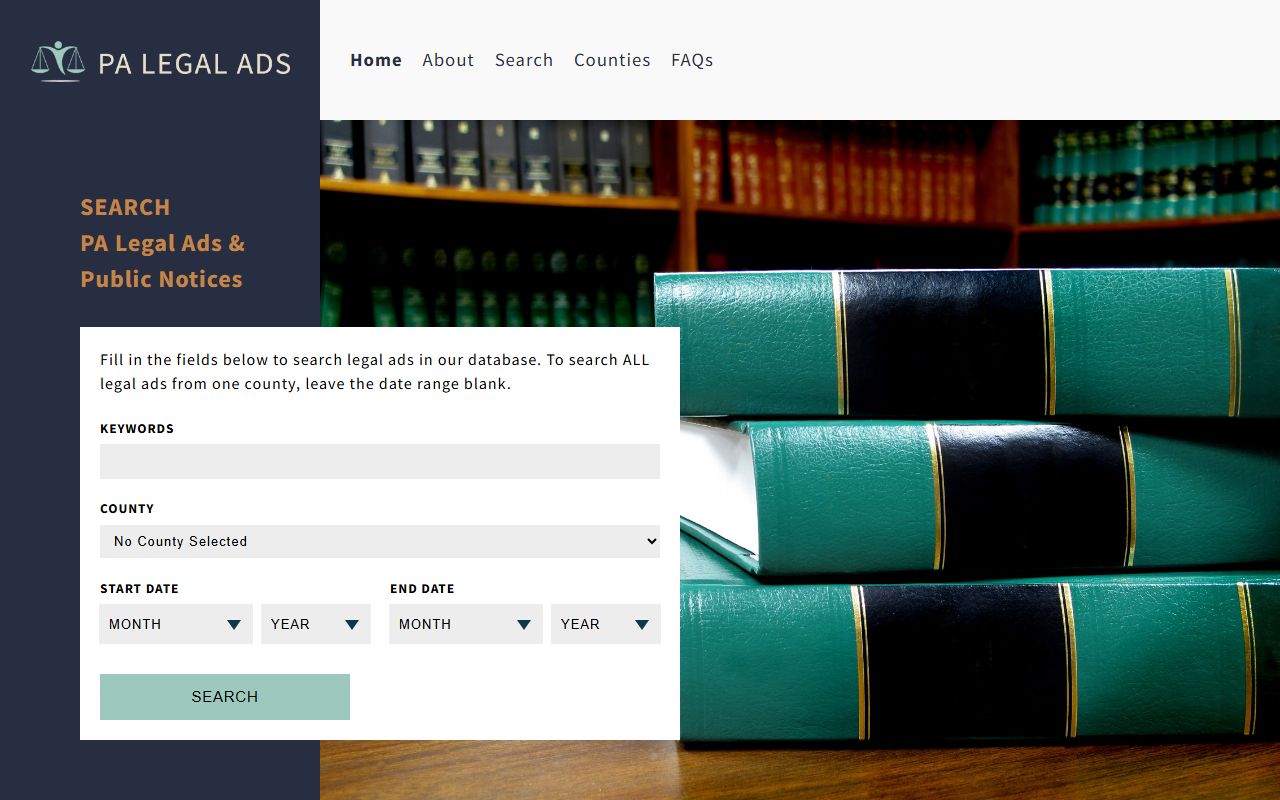
Pennsylvania law requires published notice before unclaimed property is transferred to the Treasury. These legal ads appear in the Pennsylvania Bulletin and in approved county newspapers. Reading Eagle has historically published Berks County legal notices. Reviewing archived legal notice pages can help Reading residents find older claims that predate the online database.
How to Search for Reading Unclaimed Property
The search portal accepts your last name as the primary search field. Enter your first name and optionally your zip code or address to narrow the results. Reading's diverse community includes many residents whose names may have been recorded with alternate spellings when financial accounts were first opened. The approximate match checkbox on the search form accounts for these variations and is worth enabling if your initial search returns no results.
Try multiple search strategies. Use your current address in Reading and any prior addresses in Berks County. Also search under your name as it might appear on old accounts, such as with a middle initial or a maiden name. Businesses that operated in Reading should search under the company name as well as under the names of principals and owners.
Reading has a large Puerto Rican and Latino community. Names with accent marks may have been stored without them in older financial records. Searching both versions of your name, with and without diacritical marks, is a practical approach. The approximate match feature helps, but direct name variations are worth trying separately.
Common Sources of Unclaimed Funds for Reading Residents
Reading's industrial past produced many long-term employees of manufacturing companies, utilities, and retail businesses. Workers who left jobs without collecting final paychecks, cashed out pensions, or closed retirement accounts may have forgotten balances sitting in the Treasury system. Former employees of companies that no longer exist should still search, because the Treasury holds those funds even after the business closes.
Security deposits are another major category. Reading has a large renter population, and when landlords sell properties or go out of business, tenant security deposits can end up unreturned and eventually remitted to the state. Former renters who moved out of Reading years ago may not have received their deposits back and never followed up.
Life insurance policies are among the most valuable unclaimed property types. Families that do not know a policy exists cannot file a claim with the insurance company, so those proceeds eventually flow to the Treasury. Reading residents who lost a parent or other relative should search under the deceased's name to check for life insurance or annuity proceeds. There is no cost to search and no deadline to claim.
Filing a Claim as a Reading Resident
Once you identify matching property in the Treasury's database, select it and follow the prompts to begin your claim. You will need to create or sign in to a Pennsylvania Treasury account. The portal is fully online. Most Reading residents can complete a standard claim entirely without visiting any office.
Typical documentation includes a government-issued photo ID and proof of your connection to the reported address. A prior utility bill, lease agreement, or tax document showing your name and address is usually sufficient. Upload scanned copies or clear photos through the secure portal.
For claims involving property in a deceased person's name, Reading residents need a death certificate and proof of legal standing to claim on behalf of the estate. Under Act 50 of 2025, a notarized affidavit is sufficient for amounts up to $20,000 starting May 25, 2026. This removes the need for a full probate proceeding in Berks County for qualifying claims. Contact the Treasury at 1-800-222-2046 for specific guidance.
Pennsylvania Treasury Programs Benefiting Reading Residents
Act 81 of 2024 established the Money Match program for Pennsylvania Treasury. Under this initiative, the Treasury automatically identifies state income tax filers who have unclaimed property valued at $500 or less where the identity can be confirmed through tax records. Qualifying Reading residents receive a check by mail without needing to file a formal claim. No application is required.
Act 50 of 2025 expands the streamlined process for heirs. Effective May 25, 2026, heirs can recover up to $20,000 using only a notarized affidavit. This is a significant benefit for Reading families, particularly those with limited resources who might otherwise find the cost of hiring an attorney for probate prohibitive relative to the value of the unclaimed property.
The full legal framework governing these programs is the Disposition of Abandoned and Unclaimed Property Act, 72 P.S. §§ 1301.1 through 1301.29. The Treasury's main portal at patreasury.gov/unclaimed-property explains the law in plain language and provides direct links to the search portal and claim submission system.
Additional Resources for Reading and Berks County Residents
The Reading Eagle at readingeagle.com publishes legal notices for Berks County, including unclaimed property notifications required by Pennsylvania law. Reviewing the Reading Eagle's archived legal notices is particularly useful for finding older unclaimed property records that may not yet be in the Treasury's online database.
The Pennsylvania Bulletin at pacodeandbulletin.gov publishes statewide unclaimed property notices annually. Reading residents can search Bulletin archives for Berks County entries tied to their name or address. This resource is free and fully searchable online.
For out-of-state unclaimed property, the NAUPA portal at unclaimed.org provides access to multiple state databases in one place. Reading residents who have lived in New Jersey, Delaware, Maryland, or other neighboring states should search those databases as well. Funds do not cross state lines automatically; each state holds its own unclaimed property.
Unclaimed Money in Berks County
Reading is the county seat of Berks County, and all unclaimed personal property from the Reading area is remitted to the Pennsylvania Treasury. For county-level details including the Tax Claim Bureau, holder reporting deadlines, and additional Berks County resources, visit the Berks County unclaimed money page.
Nearby Pennsylvania Cities
Residents throughout eastern and central Pennsylvania use the same Pennsylvania Treasury database. Select a nearby city to learn about unclaimed money resources in your region.